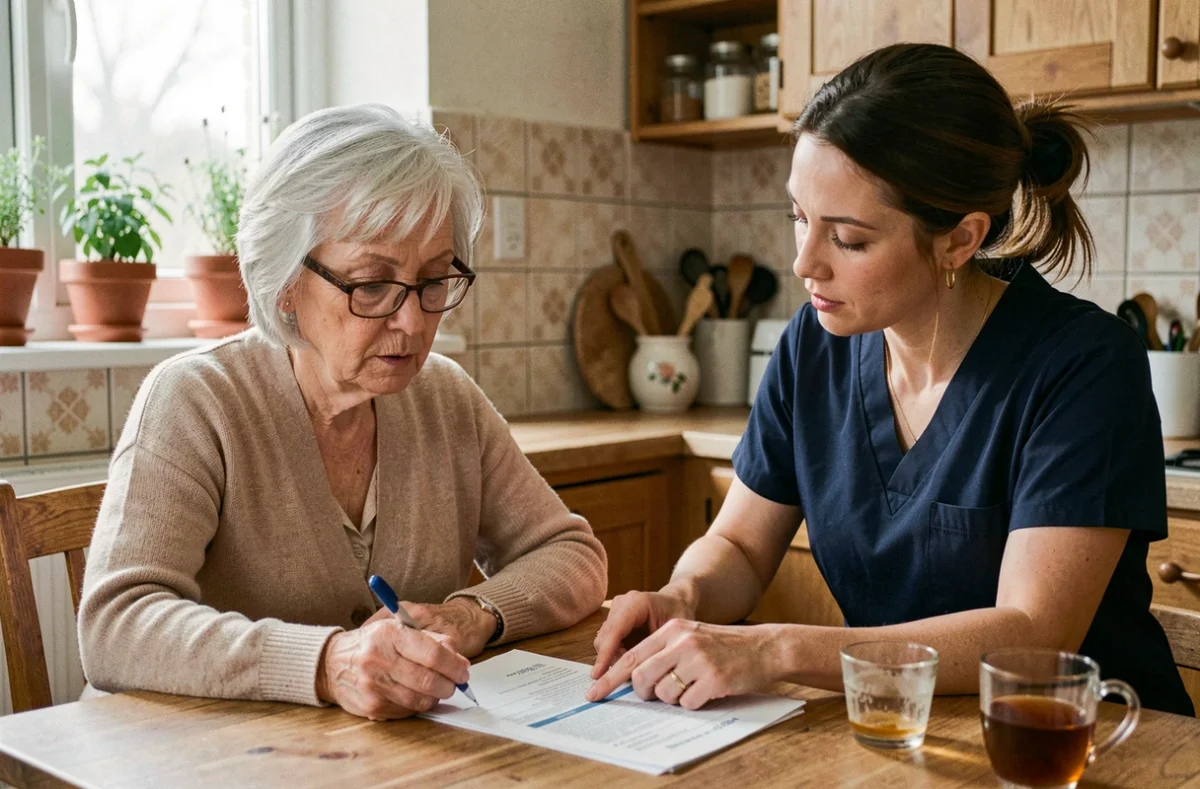
The support for seniors at home relies on a set of services whose organization has profoundly changed in recent years. Between the merger of old assistance and care structures, new legislative provisions, and the diversity of available systems, the landscape of home care deserves to be analyzed precisely to identify what really works on a daily basis.
Home autonomy services: what the July 2023 decree changes
Most guides on home care continue to distinguish SAAD, SSIAD, and SPASAD as separate entities. However, the decree n° 2023-608 of July 13, 2023 has reshuffled the cards by creating a single category: the Home Autonomy Service (SAD).
This grouping takes two forms. The SAD “assistance” covers traditional support services (cleaning, shopping, personal care assistance). The SAD “mixed” additionally includes nursing care, allowing for the coordination of assistance and care within the same structure.
For families, this reform aims to simplify the process by avoiding the multiplication of contacts. A senior who needs both a housekeeper and daily care no longer has to juggle between two separate organizations. In practice, the transition remains gradual, and not all departments are progressing at the same pace, creating notable territorial disparities.
Among the organizations that already offer comprehensive support to the elderly, Soin Et Compassion services illustrate this logic of coordination between daily assistance and personalized follow-up.
“Aging Well” Law of April 2024: measures affecting home care
The law n° 2024-317 of April 8, 2024, known as the “Aging Well” law, does not only concern nursing homes. Several of its provisions directly modify the rules of social assistance for home care and accommodation (ASH).
It strengthens the framework for combating abuse and introduces new obligations for services operating at home. It also modifies the food obligation by removing the contribution of grandchildren in the context of ASH.
| System | Before the law | After the April 2024 law |
|---|---|---|
| Food obligation (ASH) | Potentially liable grandchildren | Grandchildren excluded from the obligation |
| Combating abuse | General framework | Strengthened obligations for home services |
| Organization of services | Separate SAAD / SSIAD / SPASAD | Transition to SAD (assistance and mixed) |
This table highlights a change in logic. The legislator shifts the focus towards prevention and coordination rather than solely curative care.
Housing adaptation and fall prevention: concrete criteria
Adapting one’s living space remains the most effective lever for prolonging autonomy at home. The Retirement Insurance offers an online service for evaluating housing adaptation, developed with Crédoc, which allows for identifying points to correct room by room.
The most crucial adaptations concern three areas:
- The bathroom, where replacing a bathtub with a walk-in shower and installing grab bars significantly reduces the risk of falling
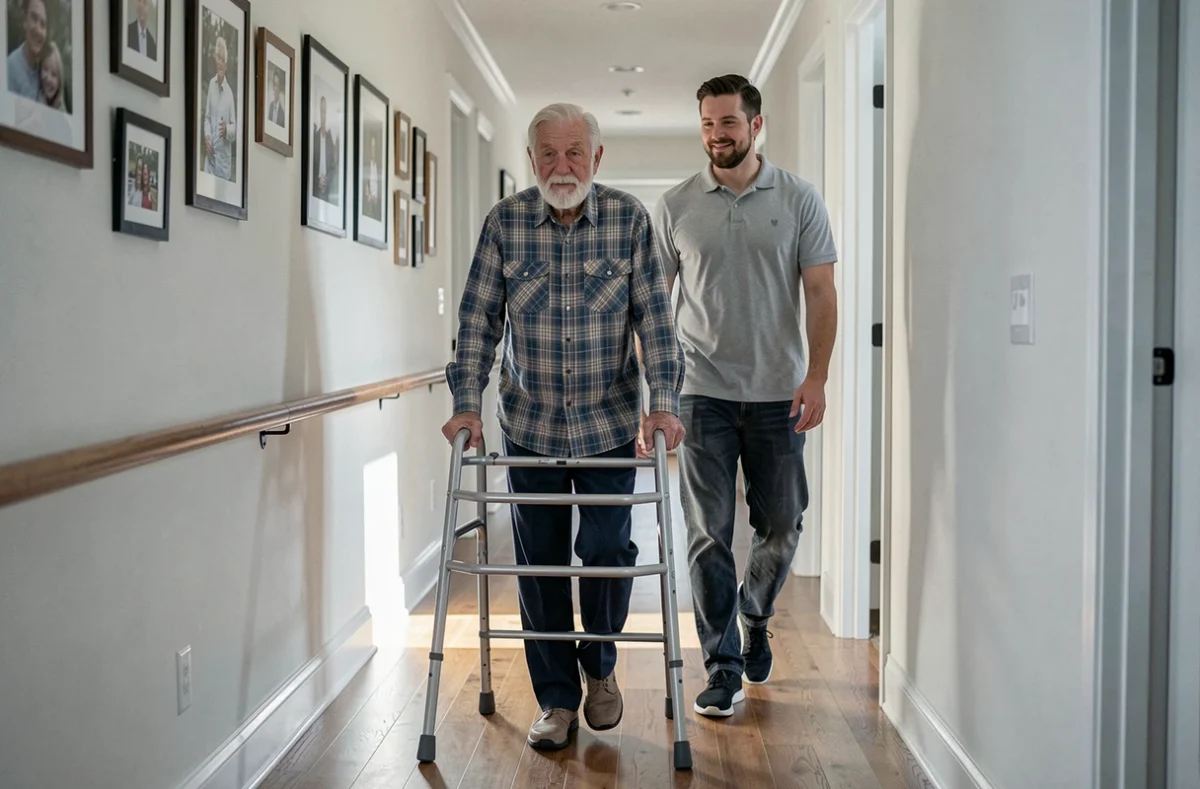
- The stairs and hallways, where automatic lighting and bilateral handrails secure nighttime movements
- The kitchen, where rearranging storage at accessible heights avoids dangerous stretching movements
A well-adapted home delays the need for collective accommodation by several years in most cases. Financial aids exist (APA, retirement fund assistance, tax credits for home employment), but their coordination often requires administrative support that mixed SADs are now expected to provide.
Maintaining social ties: an underestimated factor of autonomy
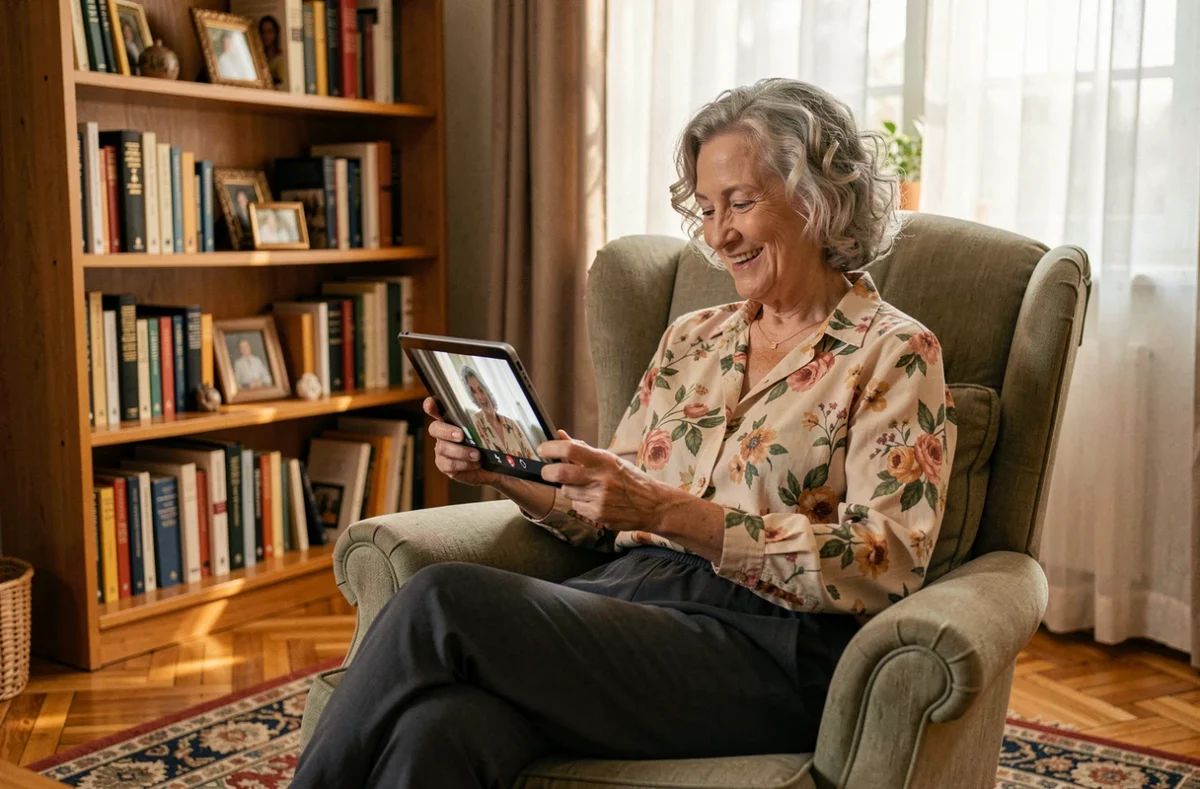
Material devices (teleassistance, meal delivery, adaptations) capture attention, but social isolation accelerates the loss of autonomy just as much as an inadequately adapted home. The preventive activities offered by retirement funds cover nutrition, memory, balance, and physical activity.
The “Good Health Good Day” program, developed by Public Health France in partnership with retirement schemes, structures this preventive approach around simple actions: moving for at least thirty minutes a day, maintaining a varied diet, accepting help when needed.
Coordination between group workshops and individual follow-up
The effectiveness of these programs depends on their integration into a comprehensive follow-up. An isolated memory workshop has less impact than a pathway combining adapted physical activity, nutritional assessment, and regular visits from a SAD professional. The reform towards home autonomy services should facilitate this coordination, provided that funding follows.
The home care of seniors now relies on a regulatory framework undergoing transformation. The merger of services under the SAD label and the provisions of the “Aging Well” law redefine the responsibilities of stakeholders. The main challenge remains the effective implementation on the ground, department by department, so that these legislative advances translate into concrete improvements in the daily lives of elderly individuals.