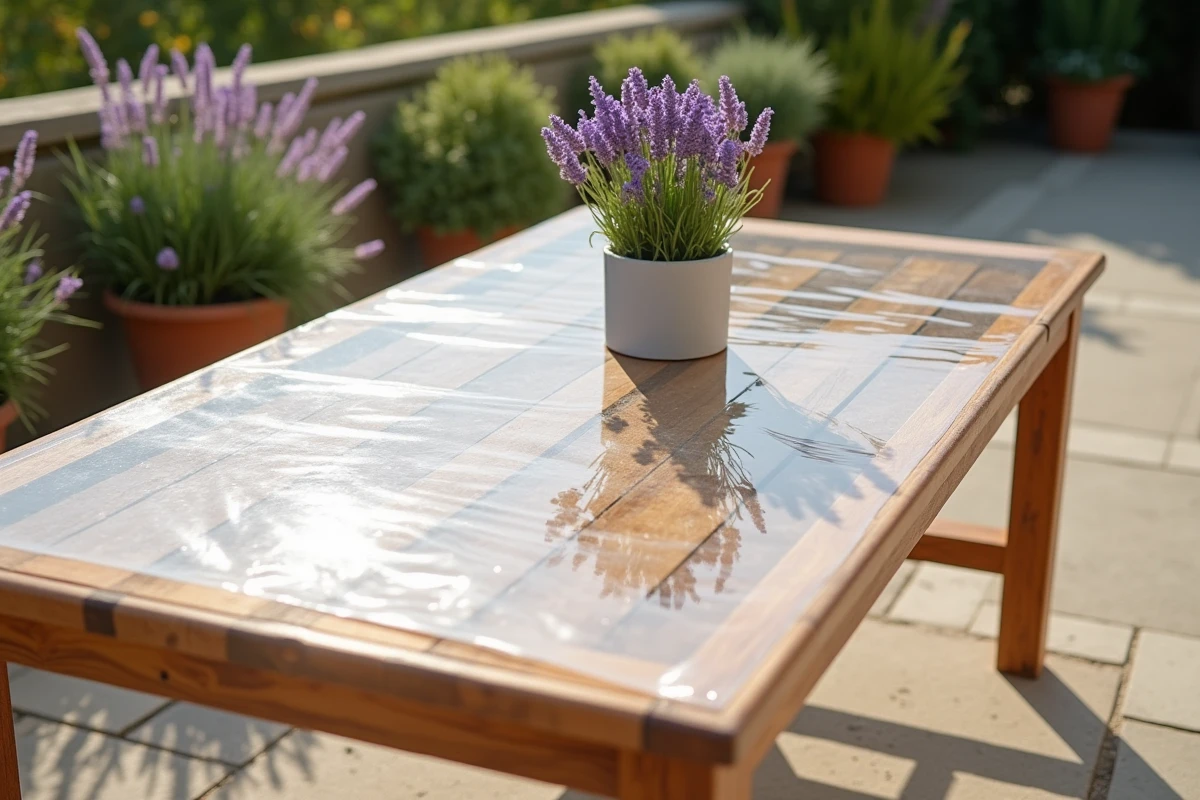
A garden table made of oiled teak, a PVC tablecloth placed on it in spring, and by the end of August, the film has yellowed, hardened, and sometimes cracked at the folds. This scenario often repeats because the “UV resistant” promise printed on the packaging says nothing about the actual composition of the film. Understanding what happens concretely under the sun allows for the selection of a transparent protection that won’t end up in the trash after one season.
Why does transparent PVC yellow outdoors despite the anti-UV label?
The PVC used for garden tablecloths contains stabilizing additives intended to slow down degradation caused by ultraviolet rays. The problem is that these additives migrate and degrade under the combined effects of sunlight, heat, and ozone. Over weeks of continuous exposure, the film loses its flexibility and transparency.
First, a milky veil appears, followed by gradual yellowing. The material becomes brittle, especially in areas where the tablecloth forms folds or remains in prolonged contact with a hot surface. This accelerated aging even affects tablecloths sold as “UV treated” in the general market.
The main issue lies in the absence of standardized ratings for these products. For shade sails, UPF ratings are available with advertised protection between 90 and 95% of UV rays. For transparent tablecloths, almost no manufacturer communicates a percentage of blocked UV rays.
When purchasing a transparent UV-resistant tablecloth for outdoor use, one often finds oneself trusting a marketing claim without measurable data behind it.
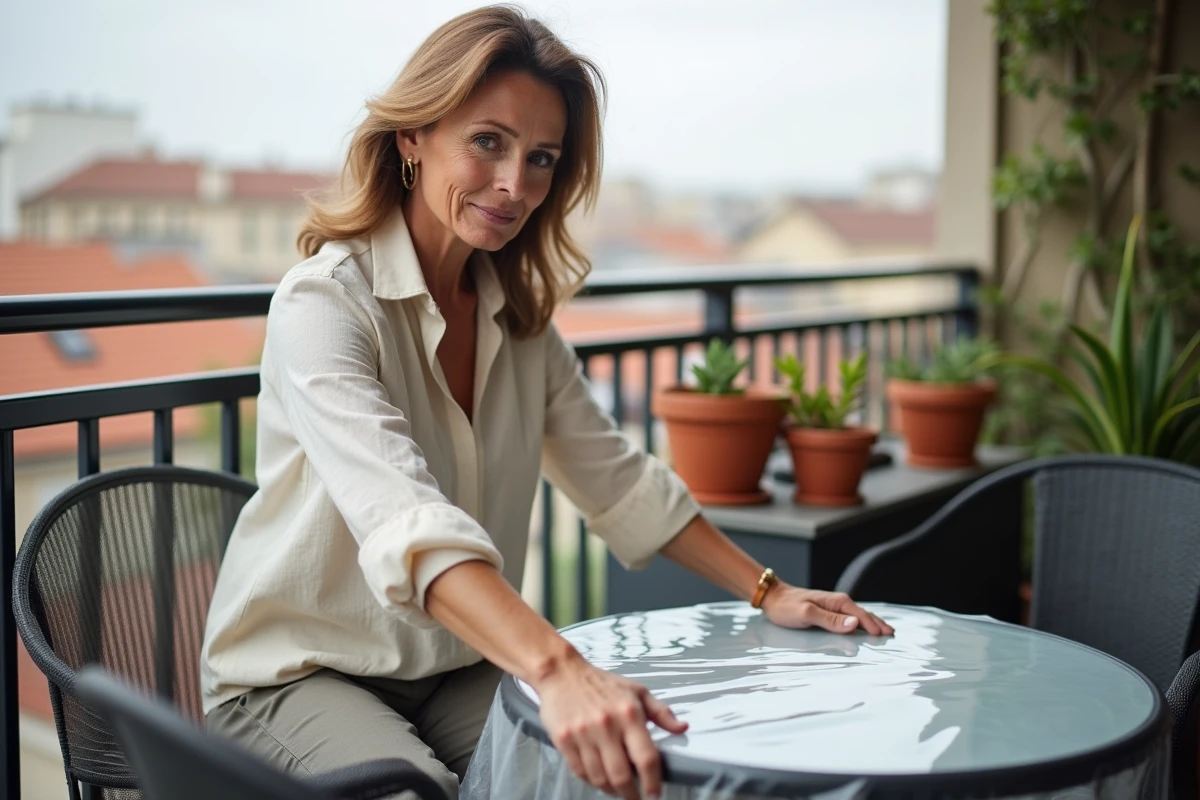
Consumer-grade PVC, marine crystal, PMMA: comparing materials for outdoor table protection
Not all transparent films are created equal. The difference lies in the chemical formulation and the intended use for which the material was designed.
Standard consumer-grade PVC
This is the most common film, sold in rolls or cut to size. Its thickness varies, but even the thicker versions undergo the same accelerated aging in full sunlight. For use under a pergola or in partial shade, it holds up reasonably well. In direct and continuous exposure, it degrades within a few months.
Marine crystal PVC
The so-called “marine crystal UV” films come from the nautical upholstery sector, where exposure to sunlight, salt, and weather conditions is much more intense than on a terrace. These formulations resist yellowing and hardening significantly better than consumer-grade PVC tablecloths. The additional cost is real, but the outdoor lifespan is significantly extended.
Transparent PMMA (plexiglass)
For truly durable protection, manufacturers are increasingly turning to PMMA. This material is naturally very resistant to UV rays and yellowing over many years, without requiring stabilizers that eventually migrate. It is not used like a flexible tablecloth (it is a rigid panel), but it provides a credible alternative for protecting an outdoor tabletop.
The following table summarizes the practical differences:
| Material | Flexibility | UV resistance in continuous exposure | Typical use |
|---|---|---|---|
| Standard PVC | Flexible | Several months before yellowing | Covered table, occasional use |
| Marine crystal PVC | Flexible | Several seasons | Exposed terrace table |
| PMMA (plexiglass) | Rigid | Several years | Fixed tabletop protection |
Field usage conditions: what accelerates or slows down degradation
The material matters, but the installation conditions radically change the lifespan of an outdoor transparent tablecloth. Two identical tablecloths placed in different contexts do not age at the same rate.
- Direct and continuous exposure to sunlight (south orientation, no pergola or umbrella) is the most aggressive degradation factor. A tablecloth removed between meals lasts much longer than one left permanently in place.
- Contact heat plays an underestimated role: a dark metal or dark stone tabletop accumulates heat and accelerates the migration of PVC plasticizers. Placing the tablecloth on light wood mitigates this effect.
- Stagnant moisture under the tablecloth encourages mold formation between the film and the tabletop, damaging both the tablecloth and the table. Removing the tablecloth after rain or ensuring air circulation avoids this trap.
- Aggressive cleaning products (alcohol, solvents, bleach) attack the UV stabilizers in PVC. Cleaning with soapy water is sufficient in the vast majority of cases.
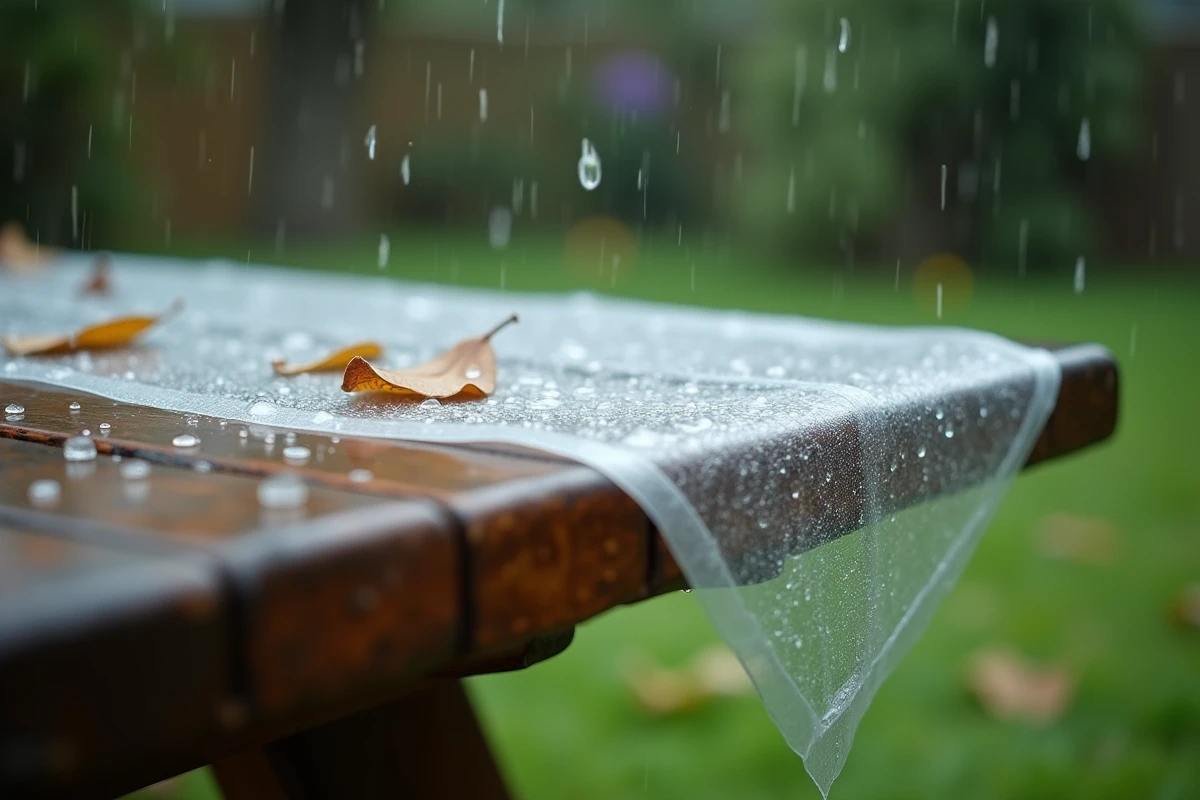
Custom tablecloth for garden table: the criteria that really matter
Buying custom does not guarantee the quality of the film. The proper cutting to fit the table prevents folds (which accelerate cracking), but it is the material composition that determines longevity.
Before ordering, check three points. The source of the film first: PVC made in France or Europe generally adheres to stricter standards regarding plasticizers and stabilizers. The thickness next, suitable for the use (a film that is too thin deforms, while a film that is too thick loses flexibility in cold weather).
Last criterion: the presence or absence of a warranty against yellowing, the only concrete commitment from the manufacturer regarding UV resistance. Some users achieve several seasons from marine crystal PVC, while others notice a veil by the second summer. The difference often lies in exposure and maintenance conditions.
The most effective reflex remains not to leave the tablecloth exposed permanently. A tablecloth removed after each meal and stored away retains its transparency much longer than one left in place day and night all summer, regardless of the chosen material.