Cooking can sometimes turn into a real puzzle with the different units of measurement. One ingredient in grams, another in milliliters, not to mention cups and tablespoons… How to make sense of it all? Fortunately, a few tips can simplify these conversions and avoid mistakes.
Imagine preparing a cake and having to juggle between American cups and European grams. No panic! With a few simple references, it becomes easy to switch from one unit to another and to successfully execute your recipes for sure. Discover how these little tricks can make all the difference.
The basics of measurement conversions in cooking
Precision is key in cooking. Converting measurements of liquids and solids can quickly become a tedious task. Here are some essential references to simplify your task.
Spoons and cups
- Teaspoon: equals 5 ml of liquid, 5g of salt, sugar, oil or butter, 4g of flour, and 3g of ground pepper, ground coffee, cocoa, icing sugar or cornstarch.
- Tablespoon: equals 15 ml of liquid, 10g of cocoa, ground coffee, icing sugar or cornstarch, 12g of flour, oil or butter, 15g of salt or sugar, and 20g of granulated sugar or coarse salt.
Glasses and bowls
- Tea cup: corresponds to 20 cl of liquid and 100g of flour.
- Medium glass: equals 20 cl of liquid.
- Coffee cup: holds 10 cl of liquid.
- Wine glass: also holds 10 cl of liquid.
- Medium bowl: holds 25 cl of liquid.
- Large bowl: holds 50 cl of liquid.
Metric units
- To convert 200 ml to cl, simply divide by 10, which gives 20 cl.
- For temperatures: 0° Celsius equals 32° Fahrenheit, 100° Celsius equals 212° Fahrenheit, 180° Celsius equals 350° Fahrenheit, 210° Celsius equals 410° Fahrenheit, and 240° Celsius equals 460° Fahrenheit.
These conversions will allow you to cook with precision and succeed in your recipes without stress. Consider these references as your allies to navigate between the different units of measurement.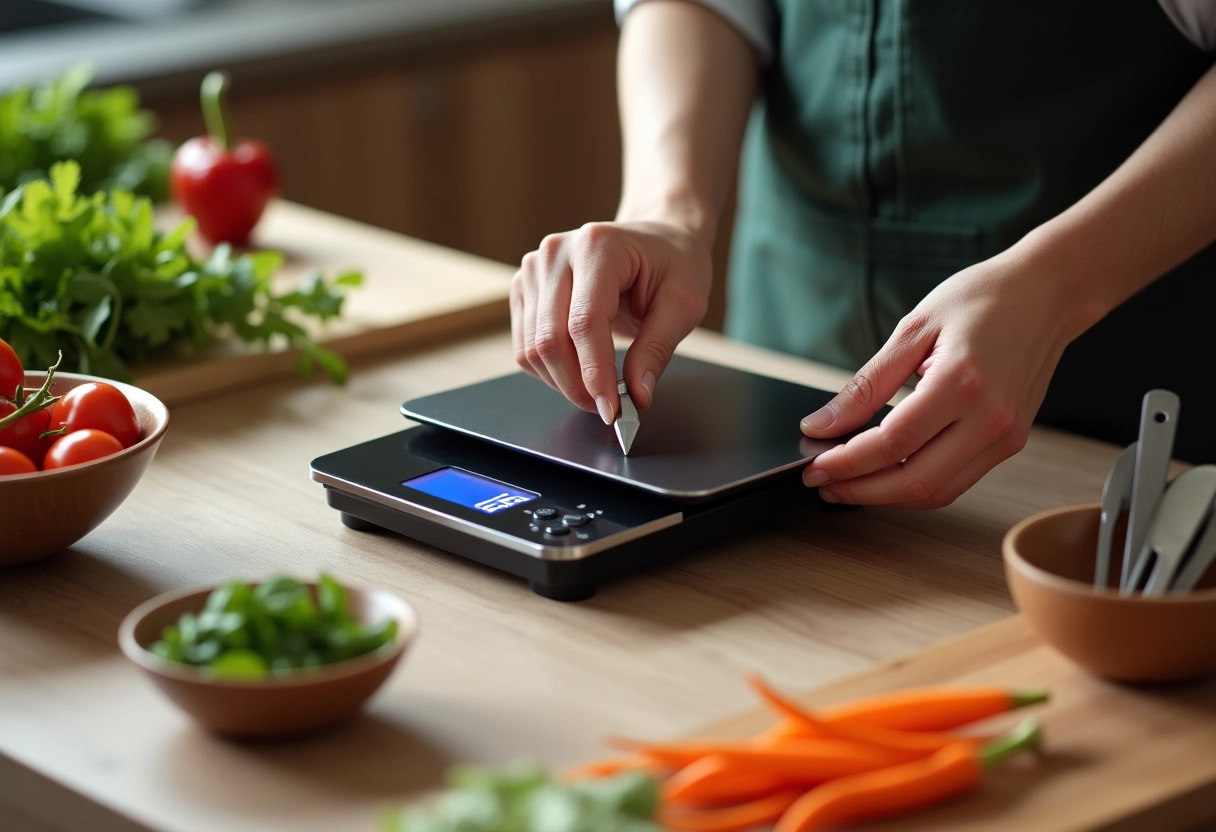
Practical tips to simplify your conversions
To simplify your conversions in the kitchen, use appropriate tools. Modern kitchen utensils offer unmatched precision, saving time and ensuring accuracy in your preparations.
Essential utensils
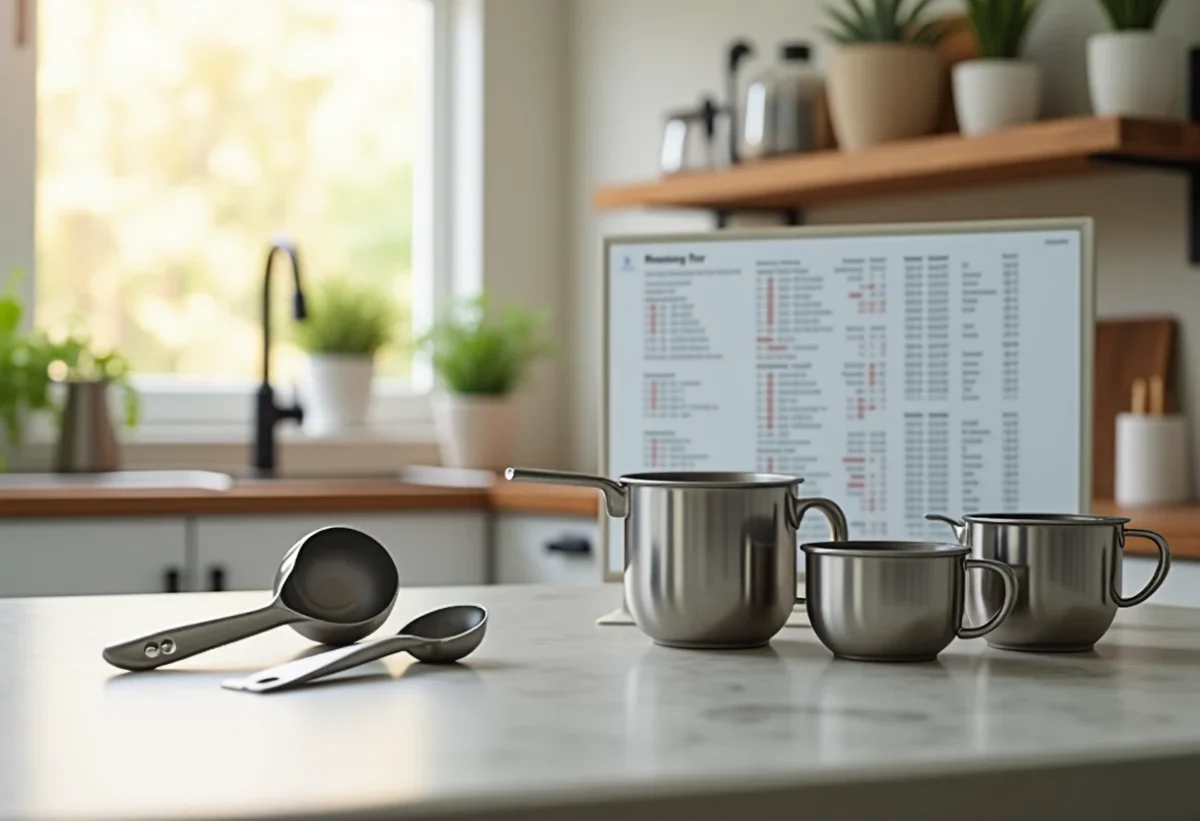
- Measuring cup: ideal for measuring liquids accurately. Its graduations make it easy to convert milliliters to centiliters.
- Measuring spoons: practical for measuring small quantities. Available in different volumes, they ensure exact measurements.
- Pipettes: perfect for preparations requiring millimeter precision, such as baking or culinary chemistry.
- Kitchen scale: essential for weighing solid ingredients. Choose an electronic scale for more precision and ease of reading.
- Kitchen thermometer: indispensable for accurately controlling cooking temperatures. Useful for meats, syrups, and candies.
Conversion charts
Display a conversion chart near your work surface. These charts provide quick conversion assistance between common units of measurement. For example, knowing that 1 cup equals 240 ml or that 1 tablespoon equals 15 ml helps avoid mistakes.
Also, use dedicated mobile applications. Some offer advanced features like instant conversion when entering quantities and alerts for necessary adjustments based on ingredients.
These practical tips will allow you to cook with increased precision, making your recipes even more successful and delicious.